The Narrow Path: Correct Christian Doctrine and Salvation
The Narrow Path: Correct Christian Doctrine and Salvation
Witness 1
There is a lot of Christian misinformation out there, and not following the words of the Bible can lead to grave danger and suffering. One thing we always want to do is to make sure that we adhere to the correct doctrine, as it is very pure, simple, beautiful, and perfect. Whenever people add more onto the words of Jesus or the Bible, it is always incorrect.
The Two Witnesses ministry is not only non-denominational, we are anti-denominational. Christian denominations are a divisive and distracting tool of the devil meant to divide the body of Christ. Denominations are a foolish way to divide and conquer Christianity that many have fallen for. The obsession with labeling beliefs and adhering to what one particular pastor or person says versus another is a baffling trait that I fail to understand.
That being said, when it comes to doctrine, the early Lutherans and Protestants held the most correct view.
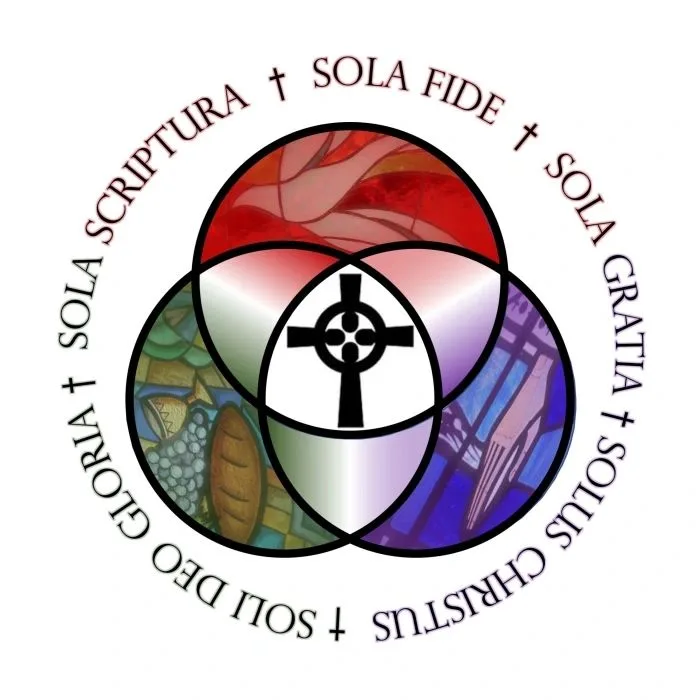
These doctrines were summed up and expressed through the four solae, in which can be found the only true and correct Christian doctrine:
- Sola Scriptura
- Sola Christus
- Sola Fide
- Sola Gratia
The interpretation of these are as follows:
Sola Scriptura: The only written word or book we need is Scripture. Nothing should ever be added to or taken away from the Bible, including non-canonical or Apocryphal literature, although these can be helpful and interesting.
Sola Christus: Only Jesus Christ can save you, no one or nothing else.
Sola Fide: Only faith can save you. The works of your hands are meaningless, and God simply requires faith.
Sola Gratia: Only through God’s grace can you be saved. Similar to the doctrine on faith, it is by no work of our own that we are saved, it is merely a gift offered by God that cannot be earned by anything we do.
These four solae cover the what, who, why, and how of salvation. There is a commonly added fifth sola, Soli Deo Gloria, which means “Glory to God alone”, which was targeted specifically at Catholic veneration of Mary and other saints. However, I feel that this one is by necessity included in the Sola Christus doctrine and prefer the simplified list of four solae.
These four concepts alone, and only them, are what you need to be saved. It’s important to stop here, and not add anything onto them, as doing so is incorrect and dangerous. That’s why the Bible closes with a stern warning not to add anything to it or take anything out of it.
So, if these are what you need to be saved, then what do you NOT need to do to be saved?
Things that are unnecessary for salvation include:
- Water baptism
- Tithing
- Good works
- Going to church
- Healing or performing miracles
- Speaking in tongues
- Missionary work
- Confession
- Communion
- Dedication
- Consecration
Only through a metaphysical baptism of the Holy Spirit can we be saved. While actions like these are good, helpful, and should be done, they are not necessary for salvation. We would encourage all of the above; however, anyone saying that any of the above actions are necessary for salvation is preaching a false doctrine that is not found in the Bible.
Matthew 12: 37 – “By your words you will be justified”
Romans 10:13 – “All who call on the name of the Lord shall be saved”
Now, those who are baptized in the Holy Spirit will naturally want to do these things, and they will be done by many who are saved. The Holy Spirit baptized will display the fruits of the spirit – love, joy, peace, patience, gentleness, goodness, kindness, and self-control, and they will perform many or all of the above actions purely out of a desire to please God.
However, consider the following scenario:
Someone who knows the Bible but never accepted it is in a shipwreck, alone in a room. They face imminent death, and at the last minute they accept the salvation of Jesus, with no baptism, no witnesses, and nothing at hand except their own mind and choices. This person can be saved, though they will never be baptized, speak in tongues, confess, witness to another, or anything else.
This is the only correct doctrine, and it’s one of the best and most important aspects of Christianity.
Take this thought experiment one step further – this person also suffered horrific injuries that caused them to be unable to see, speak, or use their arms or hands. Purely by thought, through the power contained within the human mind, they can be saved. The brain is a fourth-dimensional portal that can instantly allow any human being direct access to salvation, and the Bible is a fourth-dimensional object that facilitates this process. That is because minds and the Bible itself are two of the only things found on Earth that can have exact analogues extant in Heaven and the spiritual realm.
So, remember the four solae -
- Solely Scripture
- Solely Christ
- Solely faith
- Solely grace
Salvation comes from within, and everyone, even a mentally handicapped or uneducated person can be saved. There is no work you can do that will save you - this was the Old Testament, it’s what led the Jews astray, and it’s no longer God’s revelation to humanity. In fact, the old laws never did save anyone, they were rather merely a mirror held up to humanity meant to make us realize that not one single person can be saved through their own works and actions alone. No one alive except Jesus ever fulfilled all of the laws, so no one was ever saved by them. Rather, they were a way to make us understand why we need Jesus’s sacrifice on the cross.
Galatians 4: 21 – “Tell me, you who want to be under the law, are you not aware of what the law says?”
What about those who never heard the Gospel?
Those who never heard the Gospel can still be saved, but they will be judged by their works. This applies to a vanishingly small minority of people alive today, so it’s not worth worrying about for us. Almost everyone on Earth has heard the Gospel, including one of the last uncontacted tribes on Earth - the North Sentinelese, who chose to murder in cold blood a missionary coming to evangelize them. This constitutes a rejection of the Gospel.
We find that “the dead” will be judged by their works in Revelation 20:12:
- “And I saw the dead, great and small, standing before the throne, and books were opened. Another book was opened, which is the book of life. The dead were judged according to what they had done as recorded in the books.”
So, let’s recap this. There are those who are “saved”, which can be defined as a complex metaphysical change that comes over a person when they accept the truth of Jesus Christ dying for their sins and the Bible as God’s revelation to humanity. This group will be granted eternal life no matter what is in their books. These are those who put their faith in the four solae.
However, admission to this group is at the sole discretion of Jesus Christ. Although works cannot save you, the best way we know how to enter this group, along with the four solae doctrine, is simply to care for the poor, the widow, the orphan, etc., as if they were ourselves.
Then there are those who intentionally chose to reject the Gospel. This group will be judged the harshest. It’s possible that this group will still have a chance of redemption through being judged on their works, but that’s not a bet I’d like to take.
Based off a face value reading of the Bible and Jesus’s words, it seems most likely that this group faces unconditional damnation no matter what is written in their books and what their actions were on Earth. Those who willfully deny Jesus will be denied before God, and Blasphemy of the Holy Spirit, the unforgivable sin, is either a hardened refusal to repent and/or a willful rejection of the Gospel of Jesus Christ.
Finally, there are those who never heard of the Bible or the Gospel. This group will be judged purely through their works and will be granted eternal life or damnation at the sole discretion of Jesus Christ, the judge of humanity.
So, only the four solae can save you unconditionally, but the prudent and wise individual will hedge their bets as much as possible by also following Jesus’s words in Matthew 25: “I was hungry and you gave me food, thirsty and you gave me drink, naked and you clothed me, sick and in prison and you came to me.”
Don’t Fear the Devil
I want to remind everyone reading to not be scared of the devil or demons. The Bible tells us that if we resist the devil, he will “flee” from us. That’s because Satan is just an illusion, a phantom, more like an undercover cop who works for God to trick and entrap people rather than something that can actually do us harm.
As far as we know, all murders, rapes, kidnappings, and other evil actions done on Earth were done by human hands alone. If we are experiencing demonic attacks, we must examine our doctrine and determine whether an error in our doctrines is causing us to be opened up to these attacks. Putting your faith in anything except the four solae is to stray from the Bible, which can cause God to remove protection from us.
The devil is just a shadow on a wall. Turn on the light, and he will disappear. There is nothing to fear about Satan except his many tricks and traps that are used to convince people to do evil things.
Life on Earth is like a madhouse, or a carnival funhouse with trick mirrors that show us a distorted view of reality. That’s why we need to use the four solae doctrine given above to keep our focus straight and not stray from the things that truly lead to salvation. Do not fall for the devil’s snares and do not listen to his whispers in your ears.
Part II: The Debate on Doctrine
So, in our real-life ministry I gave all of that as a sermon. Although Witness 2 predicts that these two ministries will be merged someday, we aren’t ready to disclose our true identities yet, for obvious reasons like death threats, extortion attempts, and the government harassing us.
However, that’s beside the point. Afterwards, we received an email attempting to discredit my sermon from one of the people who attended it. These are the people who still want there to be more to it all, for whom the New Testament, faith, and grace is never enough. These people want to be justified by their works, as clearly, they never read Galatians 4: 21 or the complete list of Jewish Old Testament laws.
Their doctrine involves a belief that to be saved, you must first meet certain, usually cherry-picked Old Testament laws, have good works, observe the Sabbath and feast days, etc. They consider faith in Jesus Christ to be “step two” building on top of “step one” – following the Old Testament laws - and believe that when he said he came “not to abolish the law but to fulfill it”, in some way this means that the old law is still in effect today.
So, I will next present my reply to the email I received, slightly edited for brevity and understanding. It presents responses to the common counter-arguments people have against the four solae doctrine I gave, and contains relevant unedited quotes from the original email to me. What these counter-arguments are will be made clear while reading.
Hi [redacted],
I think the main disagreement here stems from the Old Covenant versus the New Covenant, and what this means. I’m pretty familiar with this argument, as we get a good number of people arguing the same point you are making, and it surprises me because this is really a fundamental part of Christianity. We are no longer Jews, and the old laws, festivals, etc., are no longer required.
Before I get into it, I want to make one point. Claiming to need to follow the law can be dangerous, along with, I believe, incorrect. Remember that as we judge others we will be judged, i.e., the standard we use to judge others will be used to judge us.
So, are you aware of all 613 commonly accepted Jewish laws? Do you follow all of them? If not, you are putting yourself at risk of being judged by them and being found lacking.
Remember this verse from Paul in Galatians 4: 21 that I quoted:
Tell me, you who want to be under the law, are you not aware of what the law says?
Now, all these things I mentioned as technically unnecessary, such as speaking in tongues, baptism, going to church, confessions, etc., are all good things. Like I said, they should be done by believers, and I highly encourage all of them. However, the thought experiment I mentioned about the person who, hypothetically, is trapped in a shipwreck alone but can still be saved as a Christian purely through their own mind, disproves all of them as a requirement for salvation, which is a point you concede.
So, let’s delve into this email and let me try and respond to your points. First, I’m wondering if you are familiar with Jesus’s parable of the old and new wineskins. This is an often-overlooked parable that is fundamental to understanding who Jesus was and his teachings. He represents in this parable a total divorce and rejection of the Old Testament Jews and their corrupt system which relied upon works to “prove” man’s worthiness to God.
- “He told them this parable: “No one tears a piece out of a new garment to patch an old one. Otherwise, they will have torn the new garment, and the patch from the new will not match the old. And no one pours new wine into old wineskins. Otherwise, the new wine will burst the skins; the wine will run out and the wineskins will be ruined. No, new wine must be poured into new wineskins.”
This is the interpretation from Wikipedia:
- The two parables relate to the relationship between Jesus' teaching and traditional Judaism.[2] According to some interpreters, Jesus here "pits his own, new way against the old way of the Pharisees and their scribes."[1] In the early second century, Marcion, founder of Marcionism, used the passage to justify a "total separation between the religion that Jesus and Paul espoused and that of the Hebrew Scriptures."[3]
- https://en.wikipedia.org/wiki/New_Wine_into_Old_Wineskins
So, we find in this parable a “total separation” between Christians and Jews, and this is a fundamental aspect of Christianity itself. As such, given its fundamental nature to Christianity, this is far from the only part of the Bible where we find this concept. Jesus spent much of his time debating the Pharisees on this concept, about healing on the Sabbath, his disciples picking grain on the Sabbath, etc., and much of the Pauline Epistles are devoted to explaining and justifying the total divorce of Christians from the Jews.
So, let’s start with a common verse that I feel is misunderstood. When you quote Jesus here, “Jesus said He came to fulfill the law and not to abolish the law. Matthew 5:17”, I feel that it actually proves my point.
The definition of “fulfilled” in this sense is “completed”. When we say something is “fulfilled”, such as “this order has been fulfilled”, it means that it is finished, completed, and done. As Jesus said, “It is finished”. No one would hear “this order has been fulfilled” and take that to mean that it still needs to be done and there is still more work to be done on it. When Jesus says the law is fulfilled through him, he means that it is no longer applicable.
So, all of the other various verses you reference from Jesus and Paul in your email refer to following these new laws given by Jesus, not the Old Testament priestly laws. To say that because Jesus celebrated a feast day or because Paul still did a sacrifice at the temple means that these are fundamental aspects of Christianity is simply a mischaracterization of the text and selectively misunderstanding verses. It ignores the much greater parts of the text explaining that these are no longer Christian doctrine. If this wasn’t true, neither Jesus nor Paul would have faced the crazy level of persecution that they did.
Essentially, I feel that you are adding doctrines that can’t be found in the Bible except through a very non-contextual, biased reading of certain parts while ignoring the rest of the text that disagrees with the Old Testament law being necessary for Christians to follow.
However, we must go further into this. What “law” were they debating the religious power structures about? Jesus, as the ultimate High Priest and sacrifice, is referring to the Priestly Law, that is given in Leviticus. All those complex laws that atheists love to cite to attempt to make the Bible seem absurd weren’t actually for the common Jews, they were for the Levite, or priest sector of society. These priestly laws, along with festivals and feast days, are what Jesus is referring to here. No Christian is obligated to celebrate a particular day anymore.
The common people were bound by a set of laws that were based off the Ten Commandments. These were a different set of laws, and no one would say the Ten Commandments are no longer applicable. However, Jesus summarized and simplified them with his famous two new laws about loving God and our neighbor as ourselves.
This is what the Christian must still do (love God and love our Neighbor as ourselves, fulfilling the Ten Commandments), not worry about the Sabbath, wearing mixed fabric, eating shellfish or pork, or any of the other various Levitican laws.
Like I said, this isn’t the first, second, third, or fourth time we’ve gotten an email from someone who wants to follow and be justified by their works and the law, and it won’t be the last. There’s nothing wrong with following what you want to follow, but it’s not going to save you. Christian doctrine is that only through faith and grace can you be saved, there are no works of your hands you can do that will justify you to God.
So, this part of your email is where we fundamentally disagree:
- That they also needed to put their faith in the final sacrifice of Jesus Christ and not in the blood of bulls and goats. He continues to call himself a Pharisee Acts 23:6 and continues to keep the law but is talking about the place of the law in the process of sanctification. Saying the law is over and you don't need it anymore is like saying you don't need to learn addition but can do algebra because the addition is outdated and irrelevant. Rather it is a step in the process.
To put it simply, I just find this to be incorrect doctrine. The old law is not a “step” in becoming a Christian, this is the point of the old and new wineskins parable. Jesus says specifically not to do this, not to put the old law as a patch on a new garment.
Teaching people that in order to be a Christian they must follow the law on top of having faith and trust in Jesus would simply be incorrect doctrine. If you want to personally follow it because it makes you feel fulfilled and Holy, filled with spiritual oil, that’s great, but it doesn’t apply to other people. Saying that the law is step one and then faith in Jesus is step two is, plain and simple, incorrect Christian doctrine and preaching it can put souls at risk.
Let me wrap this up by going through some other parts of your email.
You said:
- These [old Testament laws] are all part of what it means to be a disciple. In heaven, those who have only repented might make it as if barely escaping the fire but they will have no reward. Those who continue in disobedience [by not following the Old Testament laws] will not.
The way I see it, along with the vast majority of other Christians, continuing to preach the necessity and importance of Old Testament laws is “disobeying” Jesus. In addition, I don’t necessarily agree that the Bible lays out a “tiered” version of heaven, in which we can conclusively say that some will be “greater” or “lesser” than others.
All we know is that the “last will be first, and the first will be last”. What exactly this means is up to God, but claiming that it refers to those who followed the Old Testament laws versus those who didn’t is a major stretch and leap in logic that I don’t believe can be supported by Scripture. Jesus talks about how we treat others, not which rules we followed. This part is key.
You said:
- At the end of the age, all people will be required to go up to Jerusalem for the Feast of Tabernacles and for Sabbaths and new moons. If all those things are irrelevant for our time why would they be commanded at the end of the story? These are all just things I have pondered.
I’m not sure which verse says this, can you point me to where it says this in the Bible?
You said:
- I really think we should stick to our focus on Jesus, his blood and sacrifice and his resurrection and the filling of the Holy Spirit rather than trying to give a list of theological viewpoints… I believe the focus should be on prayer and seeking the Holy Spirit and teaching should come later and in a different setting. It doesn't seem to fit the way the Spirit is moving.
The reason we started our ministries rather than just going to church is because we are tired of hearing the same old stuff over and over. I think that everyone in these groups understands the concept of Jesus’s redemptive blood and the power it has to save us. I find that churches across the planet are exclusively serving milk, and I’m tired of not hearing any meat.
So, since we’ve given up so much time and put so much energy and effort into this all, we plan on continuing to teach the correct doctrine, which is that works and “the law” can’t save you, and never did save anyone. You are correct in that only through Jesus’s blood can be saved, but you can’t add anything onto this or it becomes something else. In this case, something like Messianic Judaism.
You said:
- I did hear a warning about not preaching until the Holy Spirit comes with power and fire… wait on Him and pray with everyone else till the time for preaching comes.
I’m not really sure if I agree with this. That’s a personal choice for you, but I feel that it is the time for preaching correct doctrine. If we are correct, these are the end times, we are wrapping up the Fig Tree generation, and it’s the last chance to teach people how to be saved. I am not aware of any commandment to wait to preach until another “Pentecost” happens, or even a verse that indicates that it will happen again. Waiting for something like that just seems like something the devil would want us to do.
Finally, you said:
- In Ephesians 6 it doesn't call Satan a shadow and just a trickster but it says we must arm up to escape his flaming arrows . It takes this battle seriously and tells us to duly prepare not to be afraid but to be ready for the conflict.
On that last topic of the devil, I agree that we should be wary and cautious about him. He is a real, corporeal being, with great intelligence, cunning, and power to deceive. However, my point was that there’s really nothing he can do to Christians to harm us unless we allow him to. He is merely a deception, a shadow on the wall. Assuming God is omnipotent and omniscient, the only logical conclusion is that Satan is more like a tool that God uses to accomplish his purposes, and in fact, this is exactly the type of relationship we find between the two characters in the Book of Job.
So, if we are being attacked, then why? There must be a crack in the armor, like you mentioned. Sometimes it’s just unavoidable, and there are humans casting spells or using witchcraft against us, and there’s not much we can do except pray about it and trust in God to protect us. Will he? Yes, but only if we are following the correct doctrine. Sometimes, however, God simply wants us to be attacked or to suffer, which is something that does happen, as it helps us grow and become stronger.
So, there is nothing to fear from the devil. In fact, the greatest tool against him isn’t to fear him or his human minions, but rather to simply recognize them as powerless, and to laugh at them. Fearing the devil only gives him more power.
Remember, not everything has to turn into a debate or be picked apart. Heaven will not be full of critics, but rather people who supported others, and used their words with loving kindness. As we all know, it’s really easy to always find something to complain about or argue about, but sometimes it’s OK, even the more Christian thing to do, to just keep that to ourselves and support Christian endeavors rather than always trying to find something to disagree about.
That’s why I said we are not only non-denominational, we are anti-denominational. I see all of these doctrinal disagreements as a divide and conquer strategy by the Devil that has been quite successful. Pitting Baptist against Lutheran against Calvinist against (insert denomination here), rather than Christians against the world, trying to love and convert them like it should be, becomes nothing more than infighting and pointless debates that won’t even likely be resolved. Then, of course, there’s the issue where these doctrinal changes do actually become salvation issues, like Mormons, Jehovah’s Witnesses, and, to a lesser degree, Catholics, but that’s a whole different topic.
Alright, I hope this helped and you found this productive and interesting. I’m sure you and [Witness 2] have gone over this before, so there’s probably not much here you haven’t heard before. However, I don’t want to divide the group, and I want you to know that you are always welcome there, and it’s OK for people to disagree on things like this. Without good debates once in a while, theology wouldn’t be nearly as fun and interesting anyways.
Best wishes to you in the loving name of Jesus Christ,
[Witness 1]
While putting this post together, I received a reply to the email I just presented. This reply contained the following three counter-arguments to my points:
1. Jesus personally revealed a special revelation to this person, and them alone, which isn’t found in Scripture. This message, which disagrees with me (Witness 1), came personally in the form of a vision to this person and states that the Old Testament laws are still in effect and should be observed.
2. A quote from Zechariah about celebrating the Feast of Tabernacles.
3. The older, Aramaic version of the verse where Jesus talks about the law and prophets is quoted, with no given source, as saying Jesus “confirms” rather than “fulfills” the law.
I will now give my response to these three arguments, again slightly edited for brevity and understanding.
Hi [redacted],
I enjoyed your response as well, and I am glad you can take part in a good debate and have a little back and forth dialogue without taking it too personally. I appreciate that, and I’m glad that you still pray and worship with the people who disagree with you.
It’s an interesting, and definitely controversial thing that you suggest. As you allude to, almost no Christian would agree with the idea that the old, priestly laws are still valid and should be followed. However, this appeal to consensus doesn’t prove anything, I’d easily admit.
That being said, I still think it requires an out of context, selective, and biased reading of the Bible to come out of it with these ideas. Without reading into it, it seems to plainly disagree with you. Galatians 3: 10, for example reads:
- For all who rely on the works of the law are under a curse.
Romans 10: 4 reads:
- For Christ is the end of the law for righteousness to everyone who believes.
Romans 3: 28 reads:
- For we maintain that a person is justified by faith apart from the works of the law.
- We have been released from the law so that we serve in the new way of the Spirit, and not in the old way of the written code.
And finally, in 1 Corinthians 9, Paul clarifies explicitly in verse 20 that “I, myself, am not under the law”.
So, I’m not sure how a face value reading of the Bible suggests that the law is still valid or in effect. In fact, to suggest that seems to suggest that Christianity as a whole is a deception, and Christians should be practicing a religion more like Messianic Judaism, which layers faith in Jesus on top of following Old Testament laws and observations. Wikipedia lists some of their doctrines as:
- Jesus is the Messiah; views on his divinity vary.
- Messianic Jews believe, with a few exceptions, that Jesus taught and reaffirmed the Torah and that it remains fully in force.
So, for those Messianic Jews who accept Jesus as the Messiah, I think they will still be saved. However, if you include a belief in “affirming the Torah”, it inherently becomes Messianic Judaism and is just technically not “Christianity” anymore.
Let’s get into the three arguments presented in your reply. I don’t really find them compelling, and I’ll explain why.
So, to begin with point number one, I just don’t find special revelations to be Biblical or really that compelling. Anyone can claim to have a vision or message from God, which is why I only trust the Bible. If it’s not in the Bible, I don’t believe it. I believe that you received that message, but I don’t have any reason to believe it any more than Joseph Smith’s claim about the angel of Moroni, or the average schizophrenic hearing voices.
It's OK if we disagree, and I don’t think there’s anything wrong with you, personally, following the old laws that you want to; however, a personal claim to special revelation isn’t a solid basis for a real persuasive argument. It’s more like a gnostic or occult claim to have arcane, or hidden, knowledge, which is the basis for the mystery schools. I know you don’t believe in these, but this is how they get started. As you know, the word “occult” itself comes from the same root as “occluded”, or “hidden”.
Now, on to the Zechariah verse. Zechariah 14: 17-19 reads:
- If any of the peoples of the earth do not go up to Jerusalem to worship the King, the Lord Almighty, they will have no rain. If the Egyptian people do not go up and take part, they will have no rain. The Lord[b] will bring on them the plague he inflicts on the nations that do not go up to celebrate the Festival of Tabernacles. This will be the punishment of Egypt and the punishment of all the nations that do not go up to celebrate the Festival of Tabernacles.
Now, when we read this in context, we find that this is actually referring to the Millennial Reign of Christ, and the New Jerusalem. This isn’t referring to our time here or what we should be doing on the fallen Earth during this present, post-Messiah but pre-Millennial time.
Immediately before this part, we read in verses 8-9:
- On that day living water will flow out from Jerusalem, half of it east to the Dead Sea and half of it west to the Mediterranean Sea, in summer and in winter.
- The Lord will be king over the whole earth. On that day there will be one Lord, and his name the only name.
So, we can clearly see that this is referring to after all of the events in Revelation. Standard Biblical commentaries agree with me. In the Enduring Word commentary on verses 17-19, we read:
- a. Shall go up from year to year to worship the King: Instead of coming to Jerusalem for battle, now the nations come to honor God and to remember His faithfulness to Israel in the wilderness by keeping the Feast of Tabernacles.
- i. Jesus told us to go to the ends of the earth with the gospel but in the millennium the earth will come to Jerusalem to worship and honor God.
- b. Whichever of the families of the earth do not come up to Jerusalem…on them there will be no rain: God won’t make people worship Him during the millennium, but the advantages of worshipping and honoring God will be more evident than ever.
So, in conclusion on this point it can’t be seen as a commandment or even a suggestion that we are to follow these feast days and observations in the current time we live in.
Finally, the third argument. You don’t cite your translation, and when I look can’t seem to find a single translation on the Bible Gateway website that uses the word “confirm”. The vast majority of them say “fulfill”, as that’s the standard word used, and the rest use terms like “carry out” or “complete”.
So, in these cases, the Strong’s Concordance is very helpful, as you know. We can find this word in entry number 4137, for the word “pléroó”. Any definition of this word will meet the following criteria:
- Definition to make full, to complete NASB Translation accomplish (1), accomplished (1), amply supplied (1), approaching (1), complete (1), completed (3), completing (1), elapsed (1), fill (3), filled (16), fills (1), finished (1), fulfill (20), fulfilled (20), fully carry (1), fully come (1), fully preached (1), increasing (1), made complete (2), made full (5), make...full (1), make...complete (1), passed (2), supply (1).
So, I think it’s clear what this word means. You’d have to pretty dramatically change the meaning of it to come out with a definition like “confirm”, although even that word itself still doesn’t necessarily prove your point.
However, I’d like to go one step deeper. Let’s look at the full section in context from Matthew 5:
- 17 “Do not think that I have come to abolish the Law or the Prophets; I have not come to abolish them but to fulfill them. 18 For truly I tell you, until heaven and earth disappear, not the smallest letter, not the least stroke of a pen, will by any means disappear from the Law until everything is accomplished. 19 Therefore anyone who sets aside one of the least of these commands and teaches others accordingly will be called least in the kingdom of heaven, but whoever practices and teaches these commands will be called great in the kingdom of heaven. 20 For I tell you that unless your righteousness surpasses that of the Pharisees and the teachers of the law, you will certainly not enter the kingdom of heaven.
So, this is an excellent section and I find it really interesting. What Jesus is referring to, I believe, when he says “these commands” is his new teachings given in this chapter, known as The Beatitudes. Again, typical commentaries and standard interpretations of this section agree with me:
- a. Whoever therefore breaks one of the least of these commandments: The commandments are to be obeyed as explained and fulfilled by Jesus’ life and teaching, not as in the legalistic thinking of the religious authorities of Jesus’ day. For example, sacrifice is commanded by the law, but it was fulfilled in Jesus, so we do not run the danger of being called least in the kingdom of heaven by not observing animal sacrifice as detailed in the Law of Moses.
This commentary describes Jesus fulfilling, or completing the Law, as follows:
- Jesus fulfilled the doctrinal teachings of the Law and the Prophets in that He brought full revelation.
- Jesus fulfilled the predictive prophecy of the Law and the Prophets in that He is the Promised One, showing the reality behind the shadows.
- Jesus fulfilled the moral and legal demands of the Law and the Prophets in that He fully obeyed them and He reinterpreted them in their truth.
- Jesus fulfilled the penalty of the Law and the Prophets for us by His death on the cross, taking the penalty we deserved.
This commentary sums it up by saying, “The Christian is done with the law as a means of gaining a righteous standing before God.”
So, Matthew 5 is really one of the most important chapters in the whole Bible for Christians, and we must carefully examine it. It’s an incredibly profound, unique, and revelatory chapter, which contains within it a greater philosophy than the Vedas, the Buddha, Aristotle, and Plato combined. As a side note, to think that the genius contained within this chapter came from merely an uneducated carpenter seems to baffle the mind with its lack of plausibility and explanatory scope. The Beatitudes tell us how to live incredibly simply and perfectly.
So, I hope this was helpful. I want to sum it all up by saying that it’s OK if you don’t change your mind, and I’m not trying to attack you or come at you personally. I enjoy a good debate, and writing is something I enjoy as well. Thanks for all your support and I continue to hope you join the meetings and bring your talents and prayers to the group. However, while you can practice what you see fit, the group will continue to teach standard, foundational, and fundamental Christian Theology, not Messianic Judaism.
Next, we will look at what Witness 2 has to say on the subject.
Love is The Law: Why Do People Choose to Follow the Old Law?
Witness 2
The other night I had a dream. I was floating up to Heaven with a balloon. I was so excited. I thought, “I made it!? I’m making it! Me? Really?!” The message I heard following my thoughts was, “Very few will make it.”
In another part of the dream, God revealed one of my sins. I understood that I needed to ensure that even the seemingly “small” sins were cleared out of me before making it up.
Still, while unrepentant sin is a big part of why people may not make it, there is more to it than that.
That warning was to me and anyone reading. No matter how holy and great we think we are, we have a lot of self-reflection to do.
As I continue writing for this site and meeting people around the world, I believe that I have found there are very few true Christians out there. I don’t mean this to judge or criticize. However, I find that most are too busy for God. On top of that, many have fallen into false doctrines that will lead them away from the one true doctrine.
Most spend a lot of time reading and thinking about what is “titillating” - not necessarily what is truth. I am guilty of that, as well, and I am in a state of focusing on the Bible in my studies - not just thousands of hours of Bitchute and YouTube preachers.
Many have given over to a false spirit that feels like the Holy Spirit, but it isn’t, which I will talk about more in a moment. I want to show you how this can happen with false beliefs, especially the belief that we must still abide by the Old Law.
How does one get swept up into this false belief, and why do they stick with it?
Why People Want to Follow The Old Law
Witness 1 has laid out a great argument as to why we don’t follow the Old Law anymore. He has explained it clearly, so I want to go deeper into the psychological and spiritual reasons people insist on following it (and other false doctrines).
1. They either don’t want to or don’t know how to love.
Jesus essentially says, “Love is the Law!” He says ALL of the rest of the law hangs on loving God with all your heart and others as yourself.
First, I have written recently about why people don’t know how to love. This is because they don’t love God with ALL their heart. In this post, I write about the fact that loving God means taking time and effort to form a relationship with Him. Very few out there really want to spend the time doing that. They profess His name, but their hearts are far from Him.
Now, some may claim to spend a lot of time with God, but I am not really sure that is true. Please read the post I linked above to see if you are really doing God’s will and drawing close to Him. In a dream I had once, I was teaching a class, and I said, “The art of self-reflection is the most important thing you can have.” I truly believe this when it comes to God. When we go to God humbly, truly reflecting on ourselves, then, and only then, can we learn who He is.
We can’t go to God lying or through fakery. He knows who we are anyway; therefore, He wants you to come to Him as you are. Come as you are, yes, but then reflect and grow. So, anyway, the next thing Jesus tells us to do is I think the hardest thing to do out there: loving others.
This commandment is difficult, especially in the end times. This is not a commandment is not easy, as agape love is the highest form of love there is, something Jesus encourages us to have even for our enemies.
Do you really love people? I will say this - my prayers every day often involves asking God to help me love others. It isn’t an easy task, and I have failed miserably with it at times. In fact, I’d say there are people out there who would prefer to try to follow the 613 rules of the Old Testament than to actually just love people!
I believe that the focus on the Old Law is a way to try to escape from the command of Jesus to not only love God but to love others as yourself, whether these people want to admit that or not.
For people who found the Old Law, there is something I see that they love to do - argue! They are always coming to Witness 1 and I with supposed indiscretions, and it is never with love, but rather, it is a battle. Remember how the Pharisees were always accusing and arguing with Jesus. In the same way, followers of the Old Law (or other false doctrines), will consistently engage Christians in petty quarrels.
Further, people I know who are focused on the Old Law are celebrating holidays from the Old Testament and spending a lot of time reading Old Testament scripture. The time they are spending on all of this is taking away from their time to serve and love others or to read the more relevant New Testament.
Now going back to following the 613 rules of the Old Law, well, that leads to my next point.
2. People want following God to be as simple as a checklist.
Even in the Old Testament, while the rules were important, there was more than that to God. The rules served a purpose - for that time, that culture, and those people.
Now, we have freedom, and there is no checklist. With great freedom comes great responsibility. That means every moment we have to be critically analyzing the decisions we make. We have to be thinking about our thoughts and actions all of the time!
We don’t have a rule for every single scenario we encounter. Rather, we must be constantly thinking, “What would Jesus do? Does this align with the Bible? Is there anything speaking against this particular action I am about to take?”
I have several dreams where I am being “accused” by someone of doing wrong. In the dreams, I always quote scripture and am able to say “I know the Law.” I believe God is showing me that Satan will always be accusing us, so we must be ready to be able to support what we do with the Bible itself, and if we can’t, we need to change our ways.
Let’s think of it this way. There are many legalist ministries rising out there, but we are not one of them. The other day, I was accosted for baring my shoulders in a prayer meeting by the same person who wrote the emails to Witness 1 disagreeing with him about following the Old Testament laws.
Now, what I was wearing was modest, but it was a dress where the sleeves reveal the shoulders a bit. I will relate the exact interaction that occurred with this member of the prayer meeting:
- Woman: I wanted to let you know that you may want to be sensitive to other cultures in baring your shoulders during meetings.
- Witness 2: I’m confused. My dress was modest, and there is no specific rule about not wearing a dress with shoulders in the Bible. Witness 1 approved of this dress, and I believe it does not violate any biblical rules.
- Woman: Yes, but in their culture…
- Witness 2: Do we follow their culture or the Bible? My “culture” is the Bible.
I believe there is a clear reason God did not make a list of rules about everything - it would lead to petty quarrels and nothing could ever get done. The Bible is clear that I should dress modestly and not cause many to stumble. There were many men in the meeting, and none of them paid attention to my dress in any regard - because it wasn’t important.
I am NOT saying that we cannot call out someone on what they wear if needed, as there are times I have gone to church and I am shocked by what women are wearing.
But in this particular circumstance, I believe the woman was making up rules in the Bible that weren’t there, just to produce a quarrel. This was a nice modest sundress that would be appropriate in any situation.
So, when it comes to deciding what we wear or really any action we are about to take, we must first ask ourselves, “Does this glorify God?”
In the situation with my dress, it is getting warm here, and I will probably wear many items that show my shoulders. However, I will avoid wearing things that cause other men around me to stumble.
Are you all seeing the point? Those who go into Christian legalism are often taking away or adding to the Bible. When it comes to what is written about what women should wear, it is actually not as much as one would think.
I do not believe the woman’s actions were done out of love, and further, I believe she has her own set of rules that she is following that seem to place other people’s cultures above God himself, as we see in her email.
3. A false spirit takes over.
I have noticed that those who follow this old law are convinced they have the Holy Spirit. However, I realized what this false spirit was - a spirit of self-righteousness!
When someone feels “holier than thou” they simply feel better than others. It makes them feel good. When someone feels that they are superior to or better than another, this can produce a “good feeling” that makes someone want to come back for more.
The Bible condemns self-righteousness, which is an aspect of pride, over and over and over. In fact, if you think about it, self-righteousness is one of the most dangerous sins because one cannot self-reflect.
Because of their pride, the Pharisees were not able to see what they were doing wrong. That is much more dangerous than sinners who can see what they do wrong. Many who preach legalism claim they have the Holy Spirit, and I realized, they must be feeling something that disguises itself as the Holy Spirit.
I believe this is a spirit of feeling superior or better than others, and I believe that is why these people keep coming back for more. They love their doctrines because they can constantly pick apart what others are doing wrong without ever examining themselves.
It really all is just pride in disguise, and imagine, Satan operates on pride. That is his un-Holy Spirit: a spirit that produces pride.
Now, I do want readers to know that I forgive the woman who criticized my bare shoulders, but I was able to shut her down quickly because “I KNOW THE LAW.” I know the law, and you should, too. What does the law say? If you know it and follow it, the accuser Satan can’t really say anything to you, and he will flee. Resist the devil by knowing and understanding true Christian doctrine – the four solae. Use them to discern the truth in a world full of lies and deception.
To wrap this up, I am not saying that the new law gives us freedom to do whatever we’d like. As Paul warns, we should not use our freedom as an opportunity to serve the flesh, but rather, serve God.
But one bigger part of the problem, I believe, is very few are really reading their bibles for themselves. It takes commitment, and if you don’t read it, you won’t know it. You CANNOT rely on men to teach you the word, as they can taint the word. You need to read the Bible daily, with the help of the Holy Spirit for guidance.
Please, I beg those reading to stop spending so much time on dubious websites like Bitchute, Rumble, etc., where a lot of disinformation can be found. Spend more time alone with God, with your Bible in hand, or on our website where every single claim we make is backed up with either a source or a Bible verse.
When you truly devote time to this, you will be shocked by the number of false teachings you start to recognize all around you, and you will be less likely to be deceived.