The Meaning of Life: Human Sacrifice at the End of the Ages
Witness 1
The greatest strength of Christianity is its ability to answer the big questions of life:
Where do we come from? Why are we here? Why does anything exist at all?
As we grow, we ask harder questions – if God exists, and he is a God of infinite Goodness and Love, why does suffering exist? Why does evil exist and why is it allowed to act at-will on the world? What is God’s plan for mankind, and why would a loving God create a seemingly eternal Hell? These are questions that can be answered in one word: Sacrifice.
Jesus’s death on the cross represented the ultimate human-deistic sacrifice, a ritualistic murder with atoning power for the sins of the many. What, exactly, did God mean by this, and what is his plan for the rest of us?
The crucifixion, of course, represented the fulfillment of the animal sacrifices of the Old Testament. So, to understand it, we can go back and imagine what they were like.
It was surely a grim scene, as priests carried out the following ritual described in Leviticus 5: 8. It starts with a sinner bringing two young pigeons, and it reads:
- —one as a sin offering and the other as a burnt offering. He is to bring them to the priest, who shall first present the one for the sin offering. He is to twist its head at the front of its neck without severing it; then he is to sprinkle some of the blood of the sin offering on the side of the altar, while the rest of the blood is drained out at the base of the altar. It is a sin offering
It was a brutal scene, with animals being killed, the scream of innocent lambs, and blood being splashed onto a constantly smoldering altar. A step up, I suppose, from the human-sacrificing cults surrounding them.
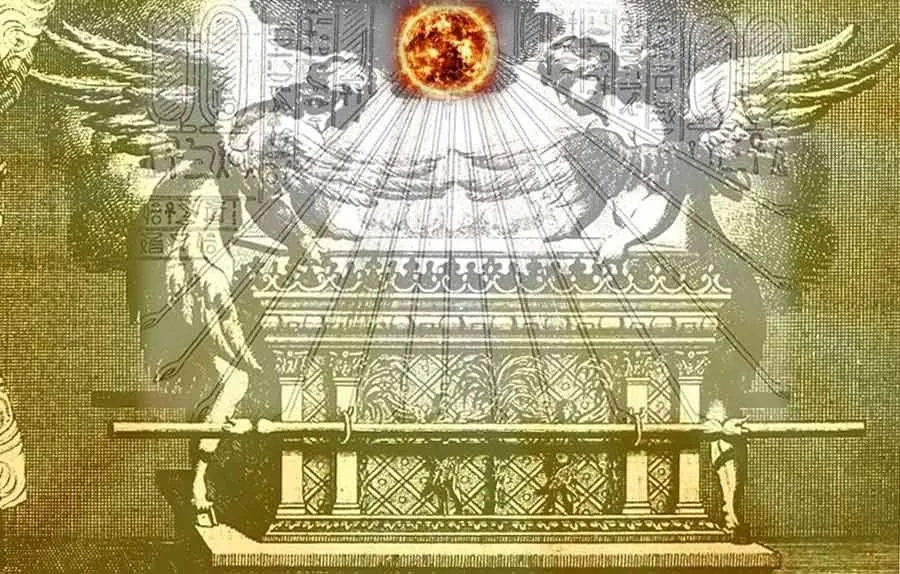
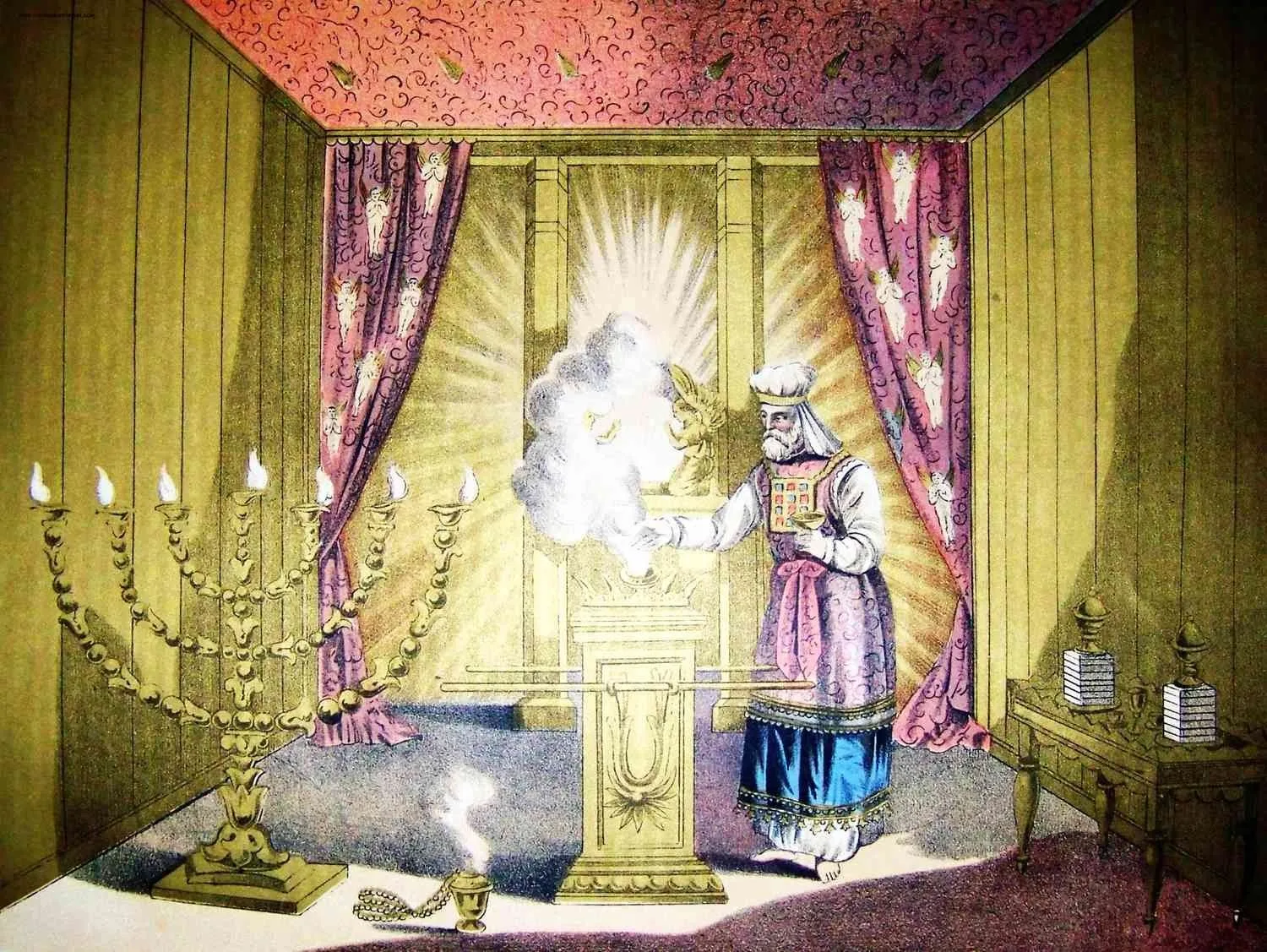
The idea here is that the temples are analogues of God’s throne room. There is the Ark, the Lampstand, and God’s presence in the Shekinah. The two temples, King Solomon’s and the temple in Jesus’s day held the Holy of Holies, which was a setup mirroring God’s throne room, just like the Tabernacle.
As there were throne rooms of God on Earth, there is an indescribably reality of God's throne room, confirmed numerous times in the Bible. It will be setup roughly the same as the inner temple.
The temples were much more important than mere buildings, they are the revelation of God's dwelling place - the Temple in Heaven. Few have seen this, but several have. Notably Ezekiel, Daniel, and John the Revelator describe God's throne room.
This is the metaphysical center of all reality, the unimaginable and incomprehensive singularity from which all life and creation was born, and through which it will die.
When we read the Bible, we notice that both Revelation and Jesus himself describe a uniquely bifurcated humanity at the end of time, with two completely distinct groups of people, with no one able to go from one side to the other. Jesus tells us that one group will go to a horrific and apparently eternal afterlife, while the other will enjoy Paradise with God the Father forever. Matthew 25: 46 describes quite clearly:
- “Then they will go away to eternal punishment, but the righteous to eternal life.”
This stark dichotomy is unnatural to us humans, who see things in shades of grey and generally consider themselves and others to be “good people”.
How does Christianity explain all of this?
Each person’s afterlife is determined by their actions, thoughts, and words, which are usually expressed in combination as “faith”.
For those who believe the Bible, this is what we can expect to happen after we die, based on Revelation, Daniel, Matthew, and Ezekiel:
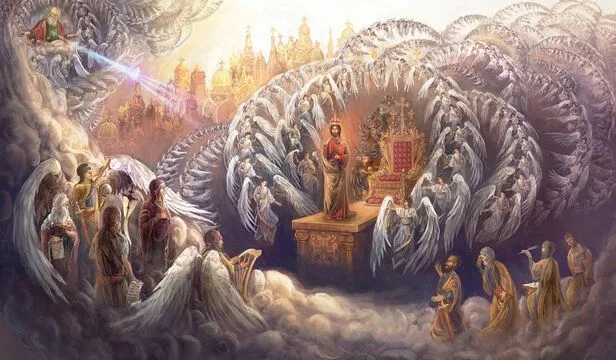
You will suddenly awake. No one is in heaven or hell yet, and all of humanity is gathered before a Great White Throne. This is the true tabernacle, or temple of God, the one that has existed before the world began, and the one we emulated on Earth, where God “resided” with the Israelites. The temple being a place of ultimate judgment, demonstrated by killing animals, makes it a fitting place for the judgment of humanity – and there will be a deadly sacrifice taken.
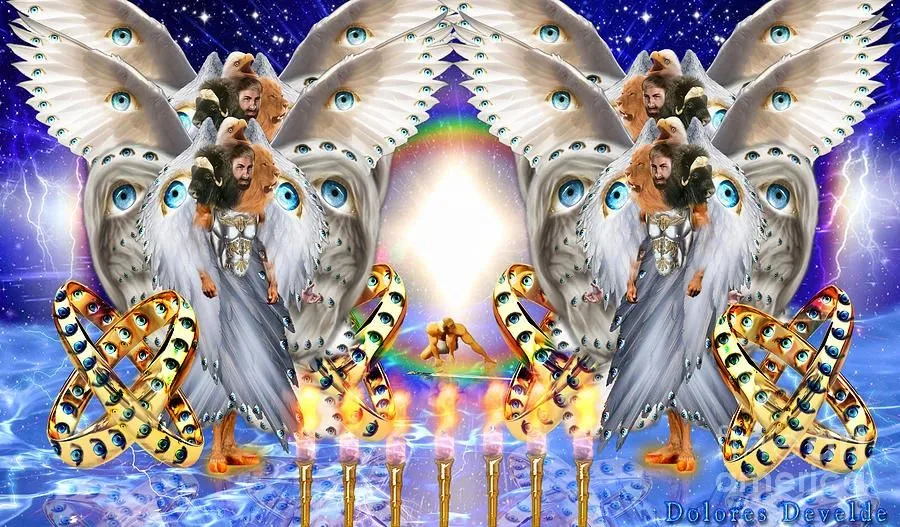
This throne is encircled by something like an “emerald rainbow”, and God himself will have an appearance like fire or glowing precious red minerals. There will be something like “flaming wheels” underneath it, which render it mobile, likely the “wheels within wheels”, or “gyroscopes” described by Ezekiel, some sort of living beings covered in eyes and sparkling like diamonds. Ezekiel interestingly describes the throne as “blue, like a Sapphire”, rather than white, implying the throne can change color. In front of the throne is a “sea of crystal or glass”, likely where humanity will be gathered, the four immensely powerful Seraphim angels, and either something like a menorah, with seven burning lamps, or seven angels or beings that represent the “seven spirits of God”.
Surrounding this throne are 24 “elders”, who wear gold crowns and reign with God in the throne room. This apparent “council of elders” may or may not assist in the judgment of humanity. Upon the shekinah, glory seat, bema seat, or mercy seat, as it is variously known, will sit Jesus. This is almost certainly the actual lid of the Ark of the Covenant, containing the real 10 commandments, Aaron’s rod, and a pot of manna, or else some sort of spiritual analog of it. He will sit between the two golden angels on the lid, and his glory will be like the sun.
His appearance will be so terrifying that even his worst enemies will fall to the ground in fear. And yet, his appearance will be glorious as well, the most beautiful thing ever seen by humanity. With our spiritual eyes and knowledge, every human being will instantly recognize his divinity and unmatchable power.
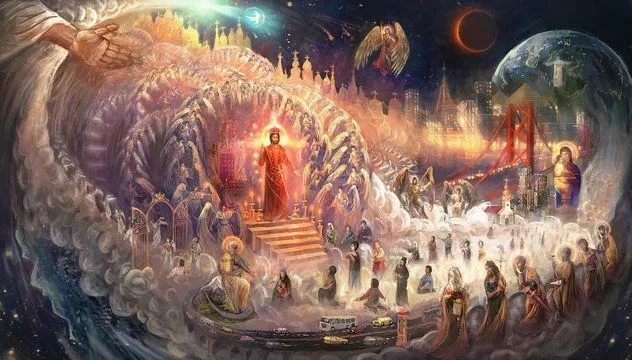
The Bible describes the physical universe as de-materializing instantaneously with a “roar”, fleeing away from the face of “he who sat on the throne”. No place will be found for the heavens or the old Earth - this universe is gone for good, dissipated like a drop of water on the surface of the sun.
Jesus tells us that “all the angels” will also be gathered there. All of creation, for the first time, will finally be together. Jesus says that he will judge us based on one criteria, apart from faith in him: I was thirsty and you gave me drink, hungry and you gave me food, I was a stranger and you took me in, I was naked and you clothed me, and I was sick and in prison and you came to me, with the clarification that this applies not actually to himself but the fellow humans gathered there. “The books will be opened”, and judgment will begin.
No doubt, this experience will be quite a shock for some people.
So, why would God create what are essentially miniature versions of himself and then sentence some of them to a fate worse than death? What is the answer to the problem of suffering?
The answer is that God has morally sufficient reasons to permit suffering in the world.
Ok, so - what are those reasons? Why does evil exist at all, and where does it come from?
Begin with the concept of a point in time in which God existed as an infinite singularity, consisting of all that ever was or ever could be. Within this singularity was contained everything that we know, or see, including the evil we see around us, indeed, infinite good and infinite evil.
A controversial Bible verse is Isaiah 45: 7, which reads, “I form the light, and create darkness: I make peace, and create evil: I the Lord do all these things.” On the surface, it seems strange that God says, “I create evil”. However, recall that in Genesis 3: 22, we read, “then the Lord God said, “Behold, the man has become like one of Us, knowing good and evil.”
This is at odds with the modern Christian idea that God could not, or would not, create, consist of, or know evil in any way, however, this theory itself conflicts with the idea that God is omnipotent. Given that at some point God was all that existed, and given Acts 17: 28, which reads “in him we live, and move, and have our being”, this leads us to the postulation that, at some point, God did contain evil, and decided he wanted to do something extraordinary: change himself.
Being omnipotent and omniscient, God knew immediately how to achieve this - the creation of what we call the universe, and the formation of billions of self-replicating versions of himself, living in a parallel dimension to the spiritual reality. We call this the physical world, in which tiny actions we do seem to have immense spiritual consequences, such as when Jesus prophesizes that he will say, “I was thirsty, and you gave me drink”, when separating the wheat from the chaff. These fragments of God would have free will, being able to choose between good or evil, and would be broadly obscured from knowing what their true purpose as a sort of “spiritual attractor” is.
Under this worldview, Jesus and Satan are composed fundamentally of the good and evil aspects of God himself. In this theory, Satan acts as a sort of apex spiritual attractor, destined to be destroyed and separated from God forever. In this purpose, Satan exerts a type of malevolent magnetic field, in which all of the fragments of God that are attracted to, and choose to do evil coagulate, so that they can all be disposed of at once.
However, the ultimate and final victory over evil itself took place when God entered into his own test, and passed it flawlessly by living a sinless, perfect life. While living this perfectly innocent life, he went willingly to his own slaughter, demonstrating the perfectness and victory of the dominant-good nature of God. In some way that we can’t fully comprehend, it would seem that the very real salvation of all mankind was literally hanging in the balance as Jesus lived out his life.
Being fully human as well as fully divine, he could have failed the test at any moment by sinning as we all do - thereby dooming all of us, and theoretically even God himself, forever. We recall that one of the themes of the Bible is that physical actions have immense, and very real, spiritual consequences. Something as consequential as changing God, by necessity, would have to be a real test, in that it would have had realconsequences, had Jesus’ life, and death, gone any other way.
It’s possible that God, through being omnipotent, was able to actually put his omnipotence on the line in the person of Jesus, in a way that would be irrecoverable if the test was failed. In the blood of Christ, we see the permanent and eternal demonstration of the victory of the good over the evil aspects of God.
This brings us to the “wedding supper of the lamb”, found in Revelation. The Church is often described as the “Bride” of Christ. This implies that there will be some sort of consummation of the wedding afterwards, as is required in a true wedding. In a spiritual sense, this would entail “two becoming one”, as is said of weddings in Mark. Therefore, in some strange and divinely inspired way, it seems that we will be reunited with God, as one flesh again; however, this time, without any of the fragments of God, or souls, that were attracted to evil in this universe. In essence, during their time here on Earth, they acted as spiritual attractors for all of the evil in the universe, and therefore in God, so that evil itself could be permanently destroyed. When these malevolent and defective souls are cast into hell, they will be forever, and permanently, separated from God.
Jesus warns us in Matthew 7: 13- 14, “Enter by the narrow gate. For the gate is wide and the way is easy that leads to destruction, and those who enter by it are many. For the gate is narrow and the way is hard that leads to life, and those who find it are few.” Furthermore, we can estimate from the Parable of the Sower that God expects roughly a quarter of humanity to pass this test. We can also extrapolate based on the mechanics of threshing and winnowing that there will be significantly more “chaff” than “wheat”.
Therefore, anyone who chooses not to follow God is as helpless, and foolish, as an animal running straight into a trap. Plenty of people just “don’t like God.” Having free will, they are within their rational rights to feel that way. However, their complaints about how God is “unfair” and “mean” are as useless as an insect protesting a government-sanctioned highway.
God has a plan, and we are either with it or against it. If you don’t like God’s plan, then that’s too bad, because it’s happening whether we like it or not. God is the authoritative and ultimate moral arbiter; therefore, if a person is against God, then they are, by definition, evil.
There are plenty of people who genuinely like God, and love him like we should, and are more than happy to follow his perfect law, laid out simply enough for a child to understand in the 10 Commandments. Indeed, they are so simple that the moral prescriptions in them are innately understood by everyone, and everyone has an inner voice that tells them right from wrong. The Ten Commandments are engraved in each person's heart, but some just choose not to listen to it.
Those who ignore these moral, innate, and basic moral commandments are simply chaff, a waste product fit only to burn, as it provides no nutrition and bears no fruit. There are many references to this purifying fire in the Bible, and it is clear that these metaphors relate in a very real way to the spiritual world. In the Bible, we are given a spiritual picture of the refiner’s fire burning away impurities - leaving only the valuable, pure, remnant behind.
John 17 gives us the clearest picture of what the Consummation of the Wedding Supper of the Lamb will look like. In this chapter, Jesus prays for us – future Christians:
Jesus Prays for All Believers
- “My prayer is not for them alone. I pray also for those who will believe in me through their message, that all of them may be one, Father, just as you are in me and I am in you. May they also be in us so that the world may believe that you have sent me. I have given them the glory that you gave me, that they may be one as we are one— I in them and you in me—so that they may be brought to complete unity. Then the world will know that you sent me and have loved them even as you have loved me.
- “Father, I want those you have given me to be with me where I am, and to see my glory, the glory you have given me because you loved me before the creation of the world.
- “Righteous Father, though the world does not know you, I know you, and they know that you have sent me. I have made you known to them, and will continue to make you known in order that the love you have for me may be in them and that I myself may be in them.”
In this prayer, we find the fulfillment of all of mankind’s greatest questions and are promised the ultimate goal of all theologies that have ever existed – perfect and complete oneness with God and all of existence. In this state, our insatiable desires and unfulfilled longings will finally be complete, and we will be in our natural, intended state in a dimension outside of time.
The consummation of the Wedding Supper of the Lamb will be incredible beyond anything we can possibly imagine.
Of course, those who were determined to be on the side of evil won’t be there, as Jesus clearly tells us. It was a sacrifice that had to be made, the ultimate painful wrenching off of a bird’s head in the temple. Only Jesus has the power, right, and authority to arraign, sentence, and execute mankind.
A human sacrifice of massive proportions, leading to God’s ultimate goal of changing his very own nature. He created evil to be destroyed, and with it, he will change his own being from infinite, to only infinite Good, forever.
This is the lesson to be learned from the Old Testament sacrifices: If you want to make an omelet, you’re going to have to break some eggs.
God bless you all.
-Witness 1