False Doctrine and Common Misconceptions: Witness 1
False Doctrine and Common Misconceptions about Christianity
Hello everyone,
The following is another of my sermons for our real life. These are given out loud, so I don’t put as much effort into sourcing everything as I do with our books and blog posts. If any readers have any questions about any of this, please contact us and we will be happy to provide more information. I hope that this can be a useful resource for you, as these misconceptions and false doctrines are all too prevelant and getting worse every year.
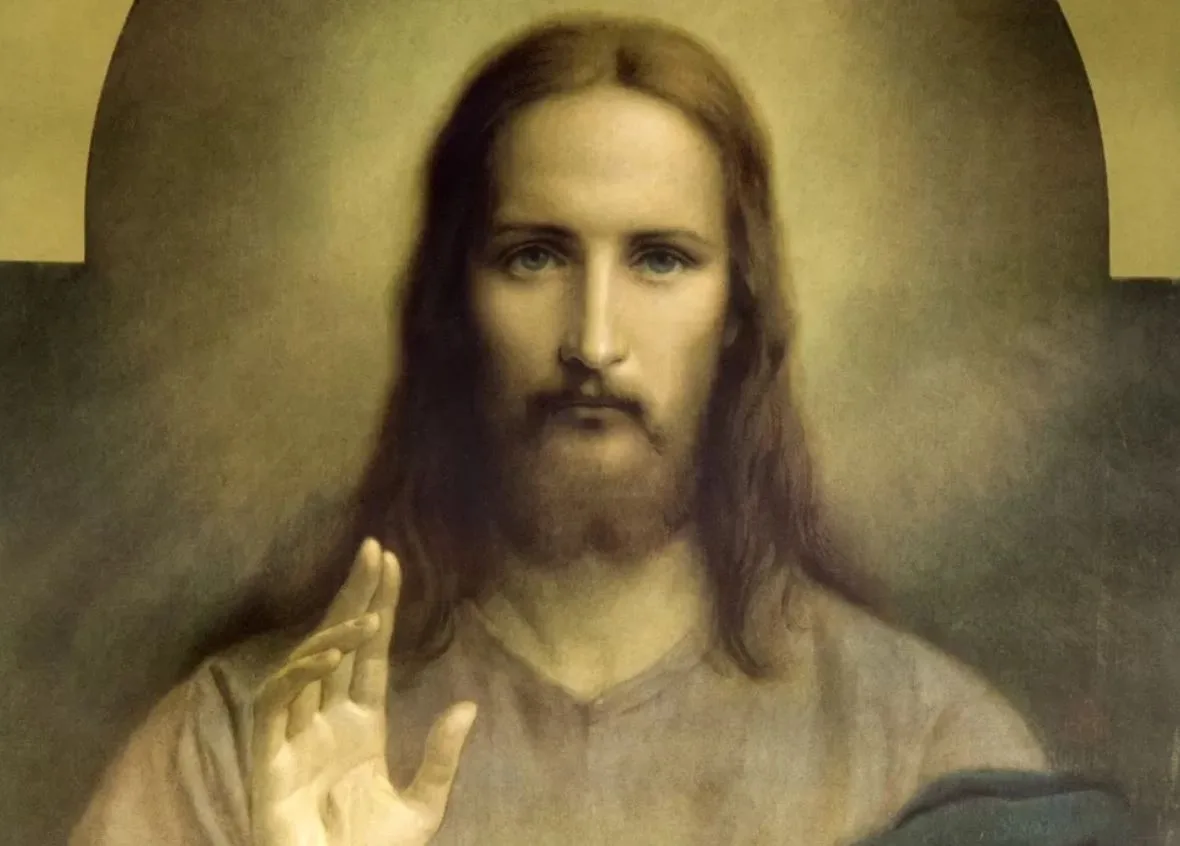
Today we are going to look at some common misconceptions and false doctrines within Christianity. Common misconceptions about Christianity, starting with the following:
- Denominations
- Baptism
- Instruments in church
- Prosperity Gospel
- Worshipping political or Earthly leaders over God
- Mixing traditional practices with Christianity
- Once saved always saved
- Rapture in the Bible
- Cessationism and Preterism
- The Gospels were written decades after the events took place
- Evolution and the Bible are compatible
- The Bible has been translated so many times it is meaningless
- The Bible does not support human rights
- Communion
- There are no good reasons to think The Bible is true
We have talked a lot about correct doctrine in this ministry, specifically about the Old Law and how Christians don’t need to follow it anymore. Well, today we are going to continue the discussion with an overview of some more common misconceptions about Christianity, with a balanced and fact-based perspective on various controversial issues or even heresies, with a wide range of severity.
Let’s start with everyone’s favorite subject:
1. Denominations.
There is no specific denomination that you have to be to be saved. No denomination has a monopoly on salvation. This ministry is not only non-denominational, we are anti-denominational. We don’t believe in any separation between the Body of Christ.
So, you don’t have to be baptized in the Church of Christ, or any other denomination, to be saved, and you don’t even have to be baptized at all. Someone can be saved purely through using their own will, mind, and thoughts. Nothing else is needed.
If I were to pick a denomination, though, I would pick Lutheranism. I think they are overall the best interpretation of Christianity. I have talked about their four solas -
- Sola Scriptura
- Sola Christus
- Sola Fide
- Sola Gratia
The interpretation of these are as follows:
Sola Scriptura: The only written word or book we need is Scripture. Nothing should ever be added to or taken away from the Bible, including non-canonical or Apocryphal literature, although these can be helpful and interesting.
Sola Christus: Only Jesus Christ can save you, no one or nothing else.
Sola Fide: Only faith can save you. The works of your hands are meaningless, and God simply requires faith.
Sola Gratia: Only through God’s grace can you be saved. Similar to the doctrine on faith, it is by no work of our own that we are saved, it is merely a gift offered by God that cannot be earned by anything we do.
These four solae cover the what, who, why, and how of salvation. Click here for more on our doctrine.
2. Baptism
There is no verse in the Bible that says that baptism is a requirement for salvation. It is recommended and prescribed for all believers, but it’s simply absurd to place arbitrary physical limitations on the boundless grace and supernatural ability of God to overcome all barriers to human salvation.
Baptism is not necessary for salvation, it is a good act that should be encouraged, but whether one was baptized or not will not be a real factor on Judgement Day.
3. Instruments in Church
Along with the weird obsession with baptism, the belief that Christians can’t use instruments in churches is another incorrect Church of Christ doctrine. There are no verses either endorsing or prohibiting musical instruments, so all we have to go on is the Old Testament. The Old Testament describes musical worship many times, and contains an entire musical section in the Psalms. The Bible has a stern disclaimer not to add to it, and these two Church of Christ beliefs are out of bounds because they rely on extrapolation on top of the Bible - something we should never do.
4. Prosperity Gospel
There is a belief that exists among some people that being a Christian is the key to unlocking earthly success. These people believe in what I have called “genie Jesus” - a God they think they can request favors and material blessings from like a genie in a lamp.
This is incorrect. The Bible is clear that Christians will suffer along with the rest of humanity and will not be spared the misfortunes we are all familiar with. In fact, Christianity comes with a promise that you will be hated, mocked, and persecuted for believing it, so this is what we should expect.
5. Worshipping political or Earthly leaders over God
No matter what country you are in, you can find deluded people hopelessly believing that next time the politicians won’t screw them over. These people are destined to be disappointed in a bitter cycle of despair and defeat, feeding on the lies and apathy of cynical and corrupt leaders. No human being, and no one alive today can save you. Do not fall for cult leaders, churches that worship a pastor, politicians, or anyone looking to control others or influence authority over people.
6. Mixing traditional practices with Christianity
Christianity is an “all or nothing” - hot or cold - theology. There is no middle ground, and if you choose to believe it then you are obligated to give up any other form of religion.
Do not continue to practice any kind of witchcraft, fold religion, occult beliefs, other religions, local superstitions, or let any other belief system supersede Christianity for you. Remove secular or non-Christian spiritual or mystical items from your house and life, like tarot cards, dreamcatchers, non-Christian religious material or holy books, energy crystals or fetish charms, etc.
7. Once saved always saved
Some people think that once you are “saved”, there is no way to lose that salvation. While I think they have good intentions, it’s plainly not true. There have undoubtedly been people who were “saved” as Christians and went on to do horrific things and “lose” that salvation. Of course, if you look at it another way, none of us know who was saved anyways, so from God’s perspective it’s true - no one he chose could lose salvation because he already knew they would succeed. However, we don’t know that, so we need to work out our salvation with fear and trembling and continue to practice good deeds daily.
Do not rely on “once saved always saved” and think that you can do whatever you want. A relationship with Jesus Christ is a lifelong path, and he always commanded those who he healed to “go and sin no more”, not just “go”. It's not over until it's over, so don't take your salvation for granted.
8. Rapture in the Bible
This misconception has to do with “left behind” eschatology, which presumes that the end of the world will play out in a way that is widely understood and predicted. While there is a case to be made for a rapture that happens out of nowhere some day before the end of the world, it isn’t really as clear as some people believe, the narrative isn’t laid out clearly enough to say anything for sure about it, and a face-value reading suggests that it takes place at the “last trumpet” in Revelation, which is at the very end of the world and post-tribulation. A rapture before the suffering in Revelation also contradicts Biblical themes of willing suffering exemplified in Jesus.
9. Cessationism and Preterism
Witness 2 mentioned these recently, so I won’t spend too much time here. Cessationism is the belief that miracles cannot happen in the present day or after a set time like Jesus’s ascension, and Preterism is the belief that the Book of Revelation has already happened, usually described as a subversive road map to the Roman Empire persecution of Christians in the 1st century. Both of these views are false, miracles can and do happen which I’ve proven here, and there are events in Revelation that have not occurred yet, like the world ending, therefore the prophecies cannot have been fulfilled yet.
10. The Gospels were written decades after the events
A common atheist argument is that the Gospels aren’t reliable because they were written too long after Jesus’s life. However, in reality, not only were the Gospels compiled and produced within 25 years of Jesus’s death, somewhere around 45-50 AD, but there’s an extremely early clue within Paul’s writings that dates to within just years of the crucifixion. This type of early attestation is extremely significant and means that there was no time at all for the story of Jesus’s life, death, and resurrection to have changed or suffered from mischaracterization over time.
The arguments about the dating of the Gospels would take longer than I have here, and needless to say there’s a healthy range of debate on the subject, with some of the most liberal scholars attempting to place the dating at around 90 AD, conveniently just after the lifetime of most eyewitnesses. However, these dating efforts have routinely failed, and a Gospel narrative codified within around 15 years of Jesus’s crucifixion is supported by the majority of New Testament scholars and academics today.
On the other hand, perhaps Paul’s epistles hold within them a precious time capsule - an ancient creed which scholars have recognized as unique due to it being a quote, something formally taught to Paul and passed down word for word by him to the early Christian church within just years of Jesus’s death.
In 1 Corinthians 5: 8, we read the Pauline Creed, a significant piece of Biblical history that most scholars agree dates to within just a few years of Jesus’s death. This is meaningful because it places the origin of Christology and the Christian faith so close to Jesus’s death there is no chance that such a fully fleshed-out, distinct, and profound theology arose due to people changing the legend as it developed over time, the “telephone game” critique postulated by many atheists and unbelievers.
Paul’s language of “I received” and “I passed on” uses technical Rabbinic wording indicating something carefully preserved and passed down to students.
The Pauline Creed, the earliest Christian attestation in the world, dated to within three years of Jesus’s death on the cross, reads as follows:
- 1 Corinthians 15:1-8 —For what I received I passed on to you as of first importance: that Christ died for our sins according to the Scriptures, 4 that he was buried, that he was raised on the third day according to the Scriptures, 5 and that he appeared to Cephas, and then to the Twelve. 6 After that, he appeared to more than five hundred of the brothers and sisters at the same time, most of whom are still living, though some have fallen asleep. 7 Then he appeared to James, then to all the apostles, 8 and last of all he appeared to me also, as to one abnormally born.
No other religion can claim to have had its tenets fleshed out this quickly, rather, they uniformly develop and change over time.
11. Evolution and the Bible are compatible
There’s a trend within Christianity today to accept a mixture of Biblical Theology and scientific cosmology. The ethos of nothingness which the scientists want us to accept today, consisting of billions of years of uncaring and unthinking evolution, eons of suffering and death against an unfathomable vast sea of dark nothingness, conflict with the Biblical account in Genesis.
Now, this could be its own sermon, and indeed I have talked about why I think the Christian must reject the scientific view of the world in a previous talk [see our book: Scientism]. Needless to say, many narrative elements that are profoundly important to the underlying purpose of the Bible, like Jesus's sacrifice, are tied to the Genesis story. The Christian cannot live in two worlds, he must make a choice who he believes - the scientists or the Bible.
12. The Bible has been translated so many times it is meaningless
This is another atheist argument against the Bible that I hear a lot. The Bible has an unbroken record and unchallenged manuscript paper trail going back in antiquity as far as we would expect to see, including letters written in the 1st century and spectacular archaeological finds like the Dead Sea Scrolls. Anyone who wants to can learn Hebrew and Greek and go back to read the Biblical manuscripts to see if anything has been changed with translation.
The Bible is a great example of an open-sourced project - there has been so many different eyes and hands on it at this point that it’s impossible to get away with changing it too much as it’s too easy to compare it with the 50 other translations out there. Anyone asking for “originals” of the Bible manuscripts simply does not understand how this type of research works or what we can reasonably expect to have access to in the present day.
There have been no major changes, revisions, or updates to Christianity since it first appeared, and the same holds true for the Old Testament as well. [see The More Rational Worldview, Section II, for more on Biblical translation and early authorship issues].
13. The Bible does not support human rights
One thing atheists always love to talk about is how the Bible “condones slavery” and “tells women not to speak in church”. What they fail to understand is that these were, for the time, revolutionary steps forward for human rights.
For a time with absolutely no laws about how to treat your slaves, the Bible was a massive leap forward for giving them at least some rights and representation. For a time when women weren’t allowed in the synagogues for thousands of years, Christians actually allowing women into their churches was a major step forward.
Always look at the time the Bible was written in. Some parts of the Old Testament can seem barbaric to us, but it was literally written for barbarians. The bloodthirsty pagan cultures surrounding the Israelites were cruel tyrants, and the Jews would have looked like today’s social justice movement at the time for even mentioning women and slaves in their laws.
The Bible actually represents a major milestone in human rights, and it’s doubtful that without it we would be nearly as progressive as we are when it comes to human rights and dignity. For it’s time, the Bible is the greatest statement on human rights and dignity ever laid out, and it set the foundation for millennia of progress to build on.
14. Communion
There is no set amount of times per month or year that is prescribed in the Bible for communion. You do not have to take communion a certain amount of times, like every week, or by using certain materials for it to count.
Communion is an act of faith and what matters is what is in your heart. The real danger is when people take communion with their lips, but their hearts are far from God.
Paul talks about Communion, which he calls the Lord’s Supper, in his letter to the Corinthians. In it, he rebukes them for withholding communion from some of the church members, as well as for getting too caught up in their divisions and petty arguments, as usual, and ruining the purpose and symbolism of the event.
We understand that the Corinthians has turned the Lord’s Supper into a spectacle, like a carnival feast, and some had used it to make themselves look better and point out how much more they had than others. Paul warns against this, and pleads with them to return to the humble roots of the Lord’s supper, as a quiet way to give thanks and remembrance for Jesus’s sacrifice.
The Lord’s Supper is significant for another reason, too. Remember that Jesus’s death on the cross was during the Jewish festival of Passover, the most important Jewish festival of the year. Jesus, of course, is the new sacrificial lamb whose blood covers the doorposts of our houses and protects us from death.
In this way, the Last Supper replaces the traditional Passover feast, once again informing the Christian that the old law, or the old Jewish traditions, are no longer necessary. Jesus truly represents the destruction of the old religion and the appearance of a transformed, radically different religion from the ancient norms of Judaism.
The root word of “communion” is the same as the word “community”. Communion is a time to be in community with fellow believers, past and present. As an ordinance that has stretched from the original disciples to twenty-first century believers and is celebrated all over the world, it brings us together as the body of Christ.
What is the right way to take communion? Jesus didn’t give very many specifics on how to take communion. Instead, He gave an object lesson to His disciples: See how this bread and drink are necessary to bring you life? In the same way, I will give you life.
So, if you want to do communion, great. If you can afford to provide a little bit of bread and grape juice and wine for your community, congregation, or children, that would be a wonderful way to teach a lesson about Jesus’s sacrifice, bring your community closer together, and do something that honors and pleases God.
However, if you can’t, that is fine too. No one will be judged more or less harshly on judgement day simply because they did or didn’t do communion a certain way while they were alive. Don’t get caught up in small, petty, doctrinal issues, remember to focus on the big picture - the state of your heart.
Christianity is not a religion based in rituals and meaningless dogma that must be carried out a certain way. It is a living relationship dependant on the heart of man. Do not take communion with a bitter, sinful heart that does not truly believe in the redemptive and salvific power of Jesus Christ’s blood. Only take it if you genuinely believe that you are in a state of Grace, having been saved by God. The act of communion cannot save you or take away your salvation, but it is an important and significant ritual in Christianity.
15. There are no good reasons to believe the Bible is true
This is a sad and unfortunate lack of knowledge that causes untold thousands of people to throw their lives and eternal souls away every day. Many people don’t realize that there are good reasons to think that the Bible is true, such as:
· Fulfilled prophecy
· Intertext codes
· Deductive and inductive arguments and reasoning
· Independent attestation
· Archeological evidence
· Divinely inspired knowledge
From the arguments I’ve covered, intertext markers of supernatural authorship like fulfilled prophecies and sophisticated codes, or simple historical checks like the criteria of multiple and early attestation and the archeological record, the Bible passes every test for authenticity we could throw at it.
So, when in doubt - remember these two words - Sola Scriptura - “only scripture”. Stick to the Bible, don’t take away from it or add to it, and you will be OK.
May God bless you all.
-Witness 1